Aug 25, 2021 | Blog
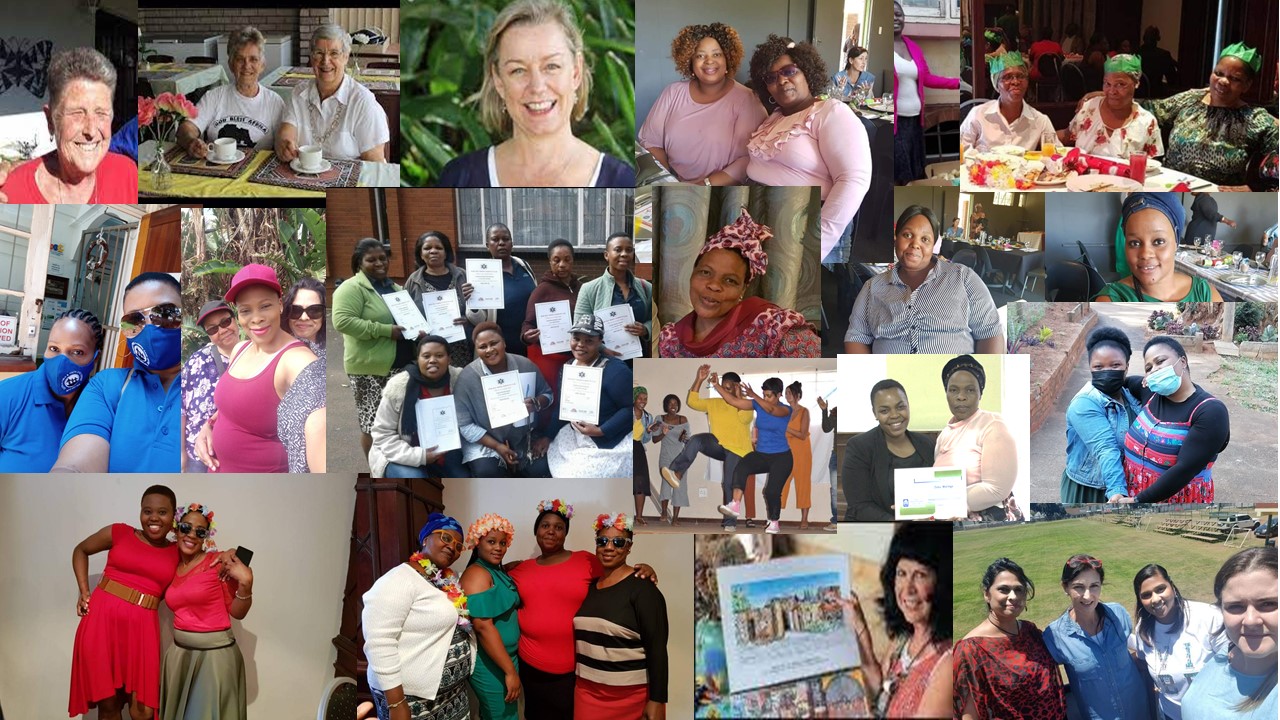
As women’s month draws to a close, I feel the need to shine a spotlight on the phenomenal women who have over the years impacted on the lives of our young people, more specifically our girl children. This diverse group of women, of all ages and backgrounds have individually and collectively contributed towards our girls discovering their worth and finding their voices.
These women: employees and volunteers, through their heart for hurting and vulnerable children, and their selfless commitment, have helped children heal, believe in themselves, and dare to dream.
Whilst my heart yearns to name these inspirational women, I dare not, in fear that my memory fails me and I leave out even one name. Suffice to say that these women, spanning a period of 31 years have touched the lives of many……… from our cooks, through to admin staff and members of our Child Care Team, arts and crafts volunteer, surrogate granny’s, mentors, prayer warriors, role models, our girls have been blessed!
I quote from “Daring to be ourselves”, by Marianne Schnall, “As women, we must learn to trust our instincts and inner wisdom, not only for our own personal well-being, happiness, and wholeness, but also in order to express our true power and individual special gifts in the world”.
Thank you for sharing the gift of YOU with our girls.
Jul 23, 2021 | Blog
At the beginning of this year, who could have guessed that we would see ourselves battling the third wave of the pandemic and protests across KZN and Gauteng triggered by the arrest of Jacob Zuma. As the protests progressed into looting and total chaos, we realised that this was more than just about the arrest of Jacob Zuma. There is a much deeper, rooted, issue we are facing as a country. Poverty, social injustice, corruption, these are just but a few. These unprecedented times have caused major fear and temulent emotions about our present safety and the future. We need to be mindful of the effects this has on our emotional state, and act to prevent poor mental health.
During the week of unrest, we saw a range of mixed emotions amongst our children. Holiday placements with family in community had already cancelled because of the level 4 lockdown, so all our children remained at the centre. Children were fearful for the safety and well-being of themselves but more especially for their parents. Watching incidents as they occurred on the roads around the centre, on social media and over the news; whilst keeping us abreast of what was happening, was also the trigger of confusion, anxiety and heightened negative emotions. Even our child care team struggled to put their own feelings aside as they responded to our children.
“Social unrest typically refers to the general dissatisfaction of a group and the ways they bring attention to societal problems. Even if you don’t belong to the dissatisfied group, you may experience intense emotions and triggers based on how the issues that are deeply rooted in the country affect you personally.” With the combined prolonged fear and resulting stress of COVID-19 and the social unrest, we need to be aware of the symptoms of mental health conditions.
It’s easy to become overwhelmed by your emotions and it’s difficult to disconnect from the feelings of those around you. During this time, we helped our children express their feelings and assured them that it is normal to try and figure out where you fit in what is happening. Comfort and strength come from understanding what is happening, even when it is out of your control! Beware though, – while you do this, it is important to make a concerted effort to avoid going down a path of negative thoughts and uncontrollable emotions. It is important to take care of yourself. Below are some useful links we found that can help you manage your mental health:
https://discoverymood.com/blog/managing-mental-health-during-social-movements-and-civil-unrest/
https://www.globalcitizen.org/en/content/ways-south-africans-take-care-of-mental-health/?template=next
Jun 29, 2021 | Blog
The Month of June is celebrated as “Youth Month” in South Africa, in remembrance of the massacre of school children during the Soweto Uprising of 1976. The purpose of this time includes paying tribute to the brave young people that took a stand against inequality in our country. Its also a time for us to reflect on the resilience of our youth of today. The Covid-19 pandemic has disrupted the dreams of many of our youth. They have had to face the challenges of having their social life curtailed, adjusting to on-line studies, in many cases putting their studies on hold and facing an uncertain future.
To commemorate Youth Month at our centre we had a special Youth Day Celebration and over the past weekend we conducted an interactive session with our young people about ‘daring to dream’. We were so impressed and encouraged to receive their positive responses despite of all the challenges that have been presented to them during this time. These were some of their responses (Names have been changed to protect their identity):

Please share your dream with us.
Sam (15) – “I want to be a farmer cause when you are a farmer you do things by your own hands. Most people do not choose this career, because they are lazy. I choose this dream to change lives by doing agriculture in this country.”
Thabo (16) – “I want to be a TV presenter and Rapper.”
Zion (12) – “I want to be a pilot.”
Yanga (15) – “I want to be an artist and a R&D Scientist.”
- Despite the disruptions of the Covid-19 pandemic, please share with us how you have remained positive and focused on achieving your dream?
Sam (15) – “I remained positive, because I always tell myself that God has plans for me.”
Thabo (16) – “Keep writing lyrics, practise and focus on your dreams.”
Zion (12) – “By wearing your mask and sanitising.”
Yanga (15) – “I want to have my own style and make my own vibe, create my own fashion designs and make my own brands. I want to travel the world. As I travel and figure out and understand the world and make it better for society. I’ll rap and have strict time management. I’ll have to study many terms of studies to be a R&D Scientist. I must be patient and not lose hope.”
- If you had a chance to motivate other young people to believe in their dreams, what would you say to them?
Sam (15) – “Live your life for you, be yourself. Remember where you came from. You make yourself. Think before you do.”
Thabo (16)) – “Focus on what you want.”
Zion (12) – “Focus on your dream and education. Never give up!”
Yanga (15) – “Start your dreams young and think big of it and progress then you will know where you are going.”
As Margaret Mead once said, “Never doubt that a small group of thoughtful, committed people can change the world. Indeed, it is the only thing that ever has.” We are encouraged to know that we do have young people in our care, daring to dream and not just that, but also believing and working towards making their dreams become a reality. Our hope is that the youth of today will rise above the present-day challenges with the same spirit as those who went before them. There is hope for the future generation. A generation of dreamers!

May 28, 2021 | Blog
Fathers, like mothers, are crucial for a child’s healthy development. Children look to their parents, both mum and dad to provide for their needs. They look to their parents, especially their fathers to provide them with a sense of safety and security, both physically and emotionally.
As we commemorate Child Protection Week at the end of May and beginning of June, I wanted to take a moment to highlight the importance of a Father’s role in a child’s life.
It’s no secret that all children strive to make their fathers proud. In fact studies show that an affectionate and involved father promotes inner growth and strength in a child. It also greatly affects a child’s cognitive and social development. It instils an overall sense of well-being and self-confidence.
In our May appeal, I shared a story of a little boy who had been abused and neglected by his own father. His mother had passed on and he looked to his father for love, support, and affection, but all he got was abuse, neglect and abandonment. You can only imagine the emotional trauma a child goes through when the one person in his life that is suppose to keep him safe and protected violates that safety. It’s heart-breaking! The sad reality is that this is one of many cases we’ve had to deal with and many children across the world are victims of.
Fathers play an important role in a child’s life that cannot be filled by anyone else. That role impacts and shapes them into teenagers and then later adults. They become who they were shaped to be! Over my years of working with children I’ve come to understand that there are diverse views on fatherhood. I would like to share a few of my own views based on what we have learnt from children themselves. Without a doubt when fathers become more mindful of the role they play and commit to making even small changes in how they interact with their children, the outcome has great value for the child’s development:
- Spend uninterrupted time with your child.
- Tell them that you love
- Attend to the little things that will them to feel
- Affirm them when they do well, whether it be in sport, academics or general behaviour.
- Use appropriate methods of disciplining.
- Help them understand the outside world.
- Protect and provide for them.
- Practice what you preach, be a positive role model.
Apr 29, 2021 | Blog
‘Self-care’, sounds so indulgent, doesn’t it?
“Self-care is giving the world the best of you, instead of what’s left of you” ~ Katie Reed
Well you will be pleased to know that self-care really does matters! And if we are to be intentional in how we care for our children, we need to be able to take care of ourselves first. As we say in child care, we are the tool. To be an effective care giver we, the tool, have to be performing optimally.
If you google ‘Self care’, you will be amazed at the wealth of information that is available. I found the following article particularly interesting; Self-Care: 12 Ways to Take Better Care of Yourself | Psychology Today – but here is the thing, I first heard of the term ‘self care’ when I started my training in 1986, I have attended numerous workshops and trainings that speak to its importance, have read up on it and given advice on it to staff over the years but, 35 years later I still wrestle with this important need. Finding that balance between body, mind, and soul is the key. I have learnt that the most important point of ‘self care’ is to be gentle with myself, just be kind to myself. So instead of feeling that I have failed because I have not managed to fit the ‘12 Ways to Take Better Care of Myself’ into my life, I aim to do one, just one and to do it consistently and well.
So start by choosing one of these ideas and choose to do it well. Your children and friends will be thrilled to have the improved version of you to interact with.
1. Get enough sleep.
2. Take care of your gut.
3. Exercise daily.
4. Develop healthy eating habits.
5. Learn how to say no to others.
6. Plan a spoil trip.
7. Spend time alone in the garden/park.
8. Stroke your pet.
9. Get organized.
10. Cook comforting food.
11. Read a book.
12. Schedule time for yourself and guard this time with everything you have.
Mar 23, 2021 | Blog
Dealing with an angry child is exhausting and may often leave you feeling helpless and even hopeless. As parents we often react, which invariably exacerbates the anger, not helping the child and later leaves us feeling guilty and inadequate.
In these types of situations its helpful to understand that behaviour whether good or bad is a form of communication.
A few years ago, we had a little boy in our care. He came from a broken home which resulted in a combination of abuse and neglect. When he came to our centre, his only form of behaviour was anger and aggression. This was not focused on one person or a particular thing. He would lash out at anyone or anything. In our attempts to help him, we did an assessment on his situation. And we had discovered that this little boy grew up in a home of no love. All he ever experienced was difficult situations that left him frustrated and angry. Further assessments helped us understand that he had trouble in trusting people and was unable to develop a positive relationship with peers and adults. He found it incredibly difficult to express his feelings and was often angry and withdrawn. He would express his anger by hitting other children, swearing at his peers and adults and breaking property. By understanding his situation, we were able to adequately help him with his anger. I am pleased to say that after much intervention he is now a much calmer, friendlier and productive little boy.
This is one of many similar cases we attend to at our centre. With years of experience, I must say that we have had to develop a range of responses, instead of reactions that offer behaviour support rather than management. I hope that you will find this useful in responding to your own child’s anger issues and offering him/her the help that’s needed.
How we can be agents of change for a child struggling to control his/her behaviour:
- Stop to consider that anger is an emotion that is triggered by a wide range of causes.
- Typically, a primary emotion, like fear or sadness, can be found underneath anger.
- Fear can include feelings of anxiety, worry and sadness.
- These feelings come from the experiences of loss, disappointment or discouragement.
- Remember that anger can be a good thing as it allows for the expression of negative feelings.
- This in turn can be used to motivate the child to find solutions to problems.
- It is important that you stay calm, you want the child to feel that you are in control of yourself.
- You may need to use self-talk while you are working through the angry moment with your child.
- Remember to breathe. Take deep breaths. This will help you stay in control of your own emotions.
- You want to model calmness. The best way to teach your child how to deal with anger constructively is by showing them through your example!
- Develop a feeling vocabulary, this will help your child give words to their emotions.
- Invite your child to tell you about the why and how of their anger and make sure to listen and respond.
- If you are struggling to contain yourself take a break from the situation and draw on available support.
- Most importantly let your child know that you love them and whilst you will not accept unacceptable or inappropriate behaviour, that because you love them, you will always be available to teach them find a way to safely express their feelings.
NB: Content of this article is from our experience here at DCYCC, which has also been confirmed from various sources off the web.